
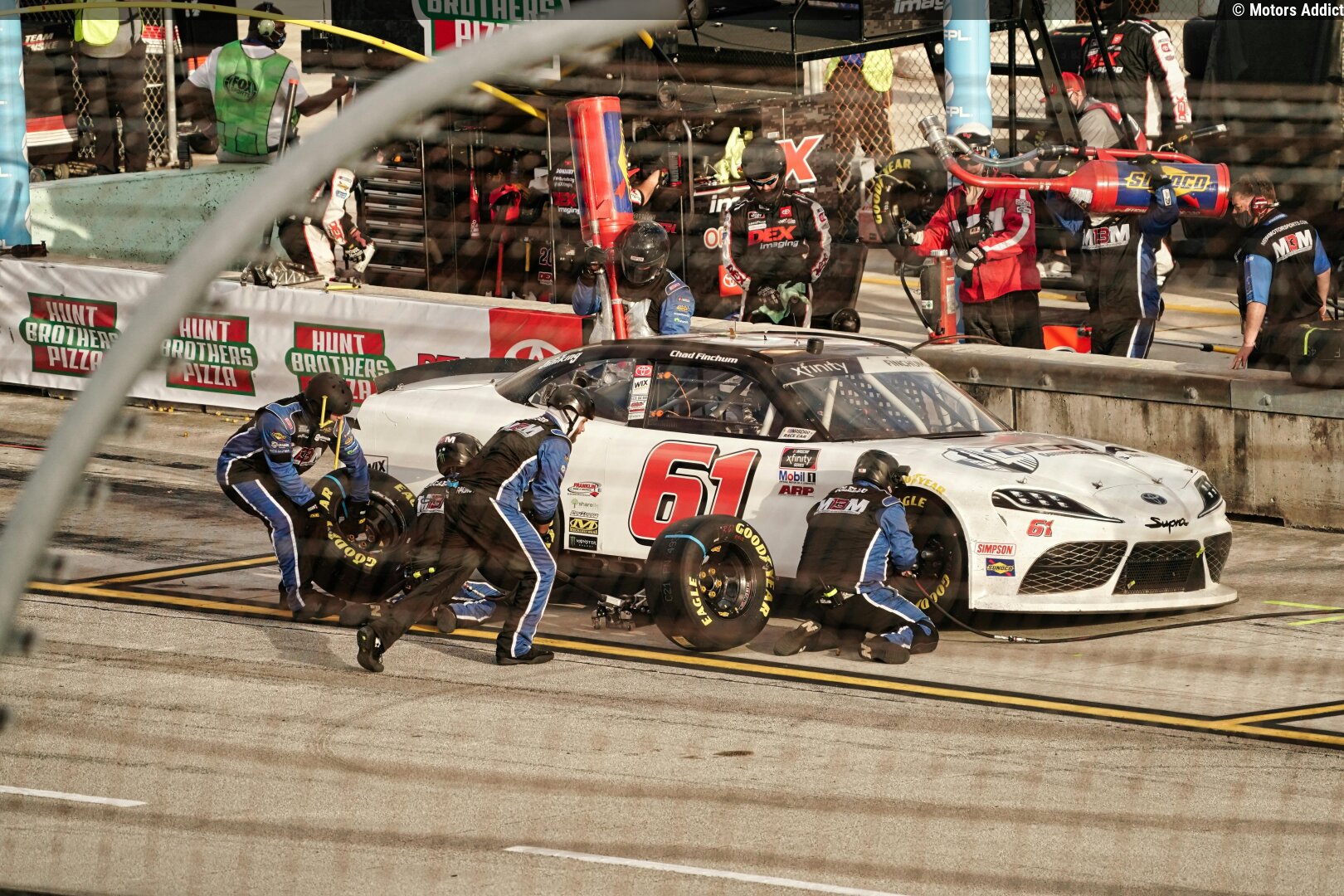
When that lead car crosses the finish line, the driver isn’t just smiling at the thought of another trophy. He or she is cheering because they have just secured $2.5 million in a single afternoon. The reality of NASCAR means that every position, every lap, and every sponsor logo is a chance at some serious money. All this puts significant pressure on the drivers because any mistake can cost them dearly.
If you’re wondering exactly what happens every Sunday for the money to flow from the racetrack and into the drivers’ bank accounts, read on.
Race-by-Race Prize Money Structure
NASCAR runs on a structured prize money system that sees every driver in the field leave race day with money in the bank. The prize money is graded first to last place, with race winners typically earning anywhere between $1.2 million and $2.5 million for each first-place finish, while those that limp over in last place still take home anywhere from $40,000 to $60,000. The exact amount of prize money on offer varies based on the track used and the race’s importance.
In 2017, NASCAR introduced an additional earning opportunity for drivers with stage racing. Almost every NASCAR race is now divided into three or four stages. Each stage awards points to the top ten cars and prize bonuses of approximately $60,000 per stage. The introduction of stages not only ensures every lap of a race carries a weight but also means more drivers stand the chance to take home a bigger payday.
The prize money further increases once the playoff races arrive, with multiplier stakes raising the stakes and offering the drivers the opportunity for career-defining payouts.
The Charter System’s Financial Impact
It’s not only the drivers who can earn big money from each NASCAR race. The introduction of the charter system in 2016 means that each of the 36 charter-owning teams will receive guaranteed minimum prize payouts each race, along with a greater share of overall prize money allocation. This means that regardless of final positions or season performance, each team is guaranteed to earn $1.1 million. While the four non-chartered teams receive lower minimum earnings each season, they compete for a small overall purse.
Although drivers are not the direct recipients of charter funds, it is ultimately up to the driver to perform and bring home the highest possible winnings.
The introduction of the charter system also saw a secondary market introduced, with teams buying and selling charters for between $15 and $20 million. There are restrictions to this, with teams not traditionally allowed to have more than three charters. This also changed the value of team ownership, making it a viable income stream rather than being solely a matter of race operations.
Money Distribution Between Teams, Owners, and Drivers
The way race prize money is distributed between all parties in NASCAR tends to follow an industry-standard split. However, the best drivers have a degree of leverage to negotiate deals where prizes are split more favourably, with the premier names keeping as much as 70% of the purse.
But there is more to NASCAR earnings than just prize winnings. Every driver has a guaranteed base salary, ranging from $500,000 for developmental talent up to $15 million for elite names such as Kyle Larson or Denny Hamlin.
Team owners need to strike a balance between profit and costs, alongside driver salaries, with operational costs averaging between $15 and $20 million annually. The most successful owners leverage sponsorship deals and merchandise sales to keep their profits high, attract better drivers, and remain competitive.
Sponsorship Integration and Performance Bonuses
Sponsorship deals are a major revenue stream in NASCAR for both teams and drivers, boasting a revenue potential that exceeds the standard prize money on offer. Drivers often receive deals that include a standard sponsorship payment alongside attractive bonuses for race performance and placements.
On any typical race Sunday, a driver could collect $1.8 million in prize money, but sponsor bonuses can add another million on top. In other words, being the first to reach that checkered flag can be worth nearly $3 million for three hours of work. These lucrative prizes and promotions offer drivers strong incentives to give their all in every race, as even mid and tail-end drivers can secure a substantial sponsorship payday.
Most NASCAR drivers enjoy a form of celebrity status, which also opens them up to payments for personal appearances and merchandise opportunities that can also form a substantial revenue stream. Popular drivers can expect to receive $50,000 to $200,000 to appear at a corporate event or fan festival. Likewise, championship-contending drivers can also see their merchandise revenue generate hundreds of thousands in annual royalties from licensing deals with NASCAR and owner companies.
Earning Opportunities Exist Outside of the NASCAR Driver Elite
While elite-level drivers such as Kyle Larson consistently bank around $25 million a year from racing, and others such as Denny Hamlin double down by driving and having an ownership stake in a team, there are still plenty of earning opportunities for mid-level drivers.
There is value in consistency in the sport, and while they might not be challenging for the title, consistently finishing in the top 15 can be handsomely rewarded by the end-of-season point fund distribution, more so than a sprinkling of podium positions surrounded by poor performances. This also applies to the owner points system, which sees teams awarded a share of NASCAR’s revenue distribution system based on season-long performances. These financial incentives encourage teams to keep racing and pushing for good performances, even outside of the top circle of competitors.
There are also opportunities for younger, development drivers to earn money while competing for smaller teams. Many compete in alternative series during gaps in their NASCAR schedule, allowing them to increase their earning but also build their reputation and maintain relationships with sponsors and other racing figures.
Conclusion
The prize money structure within NASCAR is purposefully layered to create value for every driver and to ensure there is something to compete for from the first to the final lap.
From the race purse to sponsorship deals and endorsements away from the racetrack, there are many ways for drivers to supplement their driver salary. This financial incentive, which can exceed $2 million per race, means drivers are pushing for more than just bragging rights. When you’re racing bumper to bumper at 200 mph, knowing that 15th place will pay $80,000 while finishing 10th would give you enough extra to pay for your kids’ college tuition, you’re going to keep pushing all the way to the finish line.
Not only does the financial incentive give drivers a reason to fight for every place, but it also means the sport becomes more competitive and enjoyable for the fans.